A blog post by Forest Whitaker on World Refugee Day June 20th, 2026
To be forced from your home is to have your entire world interrupted. Your routines, your memories, your sense of stability, and often the future you imagined for yourself are all disrupted overnight.
Over the years, I have met refugees and displaced communities in different parts of the world. But on World Refugee Day, I often find myself reflecting on a moment that profoundly shaped my understanding of what displacement truly means.
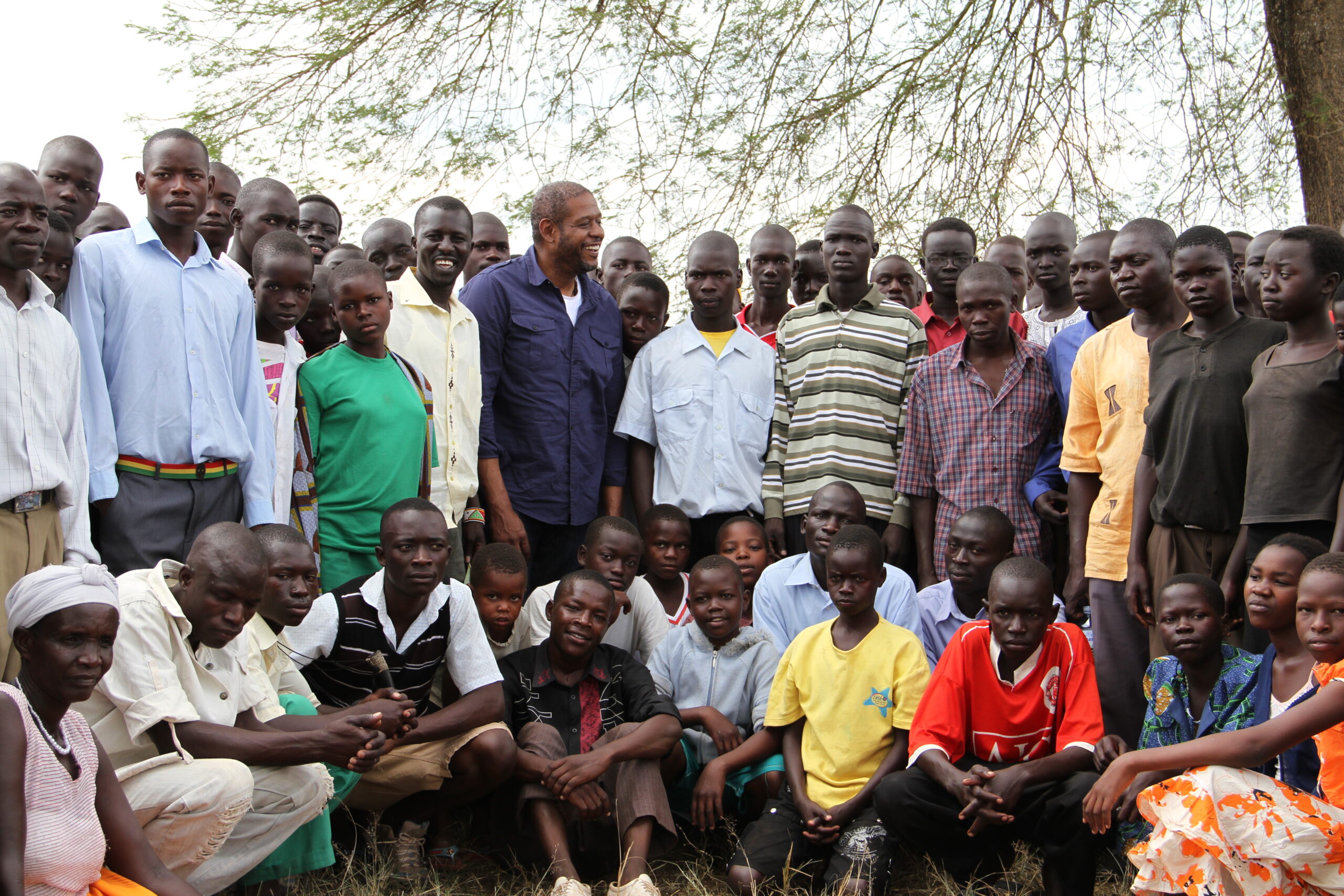
In 2014, just months after conflict erupted in South Sudan, I visited a camp for internally displaced persons. It was a scene of human misery. Thousands of people had just sought refuge from violence – their lives and a few rags were all they could save. Walking through the camp, I felt like an uninvited guest in a place that could not be someone’s home. I saw families living in makeshift shelters and young people struggling to imagine what their future might hold.
That’s when it struck me that shelter and home are not the same thing.
The camp provided safety from immediate danger. But the more I spoke with families and observed glimpses of their daily lives, the more I realized they had lost far more than a place to live. They had lost the relationships, routines, and opportunities that gave shape and meaning to their lives. Thanks to humanitarian organizations, they had life-saving shelter. But war had taken away the community and sense of belonging that make a place feel like home.
Lasting peace is not built through safety alone. It requires the conditions that allow people to participate in community life, contribute their talents, and imagine a future for themselves and their families.
At that moment, I realized that WPDI had to be there. Refugees and displaced families urgently need humanitarian assistance to survive. But they also need opportunities to learn, work, lead, and rebuild their lives. Supporting that journey is essential to helping communities recover from conflict.
More than a decade later, the challenges facing displaced communities remain immense. Across South Sudan and neighboring Uganda, conflict and instability continue to force families from their homes. According to UNHCR projections, 136 million people are expected to be forcibly displaced or stateless in 2026 (Source).
When crises reach this scale, it becomes easy to focus on numbers. Millions displaced. Thousands crossing borders. Entire communities uprooted.
Yet every statistic represents a person living with profound loss. Displacement affects far more than where someone sleeps. It can sever connections to community, disrupt education and livelihoods, and leave families uncertain about what comes next. For many, what begins as a temporary refuge becomes a long-term reality.
What stays with me most from that visit is not the image of the shelters themselves, but the uncertainty people carried with them. The question was not only where they would sleep that night. It was whether they would ever have the chance to rebuild a stable and meaningful life.
Through WPDI’s work over the years, I have witnessed what becomes possible when people are given that chance. I have met young people pursuing an education, entrepreneurs building livelihoods, and community leaders helping to strengthen peace. Their stories remind us that people are not defined by displacement. They are defined by their resilience, their aspirations, and their capacity to shape a better future.
This is why World Refugee Day matters.
It reminds us that even when all seems lost, every person deserves the opportunity to belong.
Peace and Light,
Forest Whitaker