“This VSLA has united us. We save together, borrow together, and support each other. It has reduced tension and increased trust between refugees and hosts.”
March 26, 2026 – WPDI expanded its work in Uganda in 2024 with a new deployment in Adjumani District, building on its long-standing presence in the Acholi and Karamoja Sub-Regions and Kiryandongo District. In Adjumani, WPDI’s programming is rooted directly in the refugee settlements of Nyumanzi and Ayilo 1, where both refugees and host communities face the compounded pressures of displacement, limited livelihood opportunities, and a fragile natural environment strained by recurring climate-related shocks.
Uganda hosts nearly 2 million refugees, the largest refugee population in Africa, including over 1 million children (source). Most have fled South Sudan, the Democratic Republic of the Congo (DRC), and Sudan. Adjumani District is home to nearly 231,483 asylum seekers and refugees, making it the largest refugee-hosting district in Uganda (source). Adjumani continues to navigate significant challenges, including unpredictable rainfall, declining soil fertility, rapid population growth, and heightened competition over land and natural resources. These pressures have left many households working to rebuild stability and access sustainable sources of income in a context marked by vulnerability and uncertainty.
To address these challenges, WPDI, with support from the Swedish Postcode Lottery Foundation, established multiple Village Savings and Loan Associations (VSLAs) across Adjumani District, strengthening the livelihoods of refugee-host communities through community-led savings and investment in agribusiness. Through this approach, WPDI provides training, start-up support, and ongoing technical guidance, enabling VSLA members to mobilize savings, manage loans, and invest sustainably in income-generating activities.
This model responds to a critical gap in access to financial services in displacement-affected contexts. According to UNHCR, 117.3 million people worldwide have been forced to flee their homes due to persecution, conflict, violence, or human rights violations (source), with many remaining excluded from formal financial systems.
What Is a VSLA and Why It Matters
Village Savings and Loan Associations are community-managed savings groups that allow members to pool savings, access small loans, and invest in income-generating activities. VSLAs are particularly effective in refugee and host-community settings where formal financial services are limited. By placing financial decision-making in the hands of communities, VSLAs promote economic self-reliance, resilience, and social cohesion.
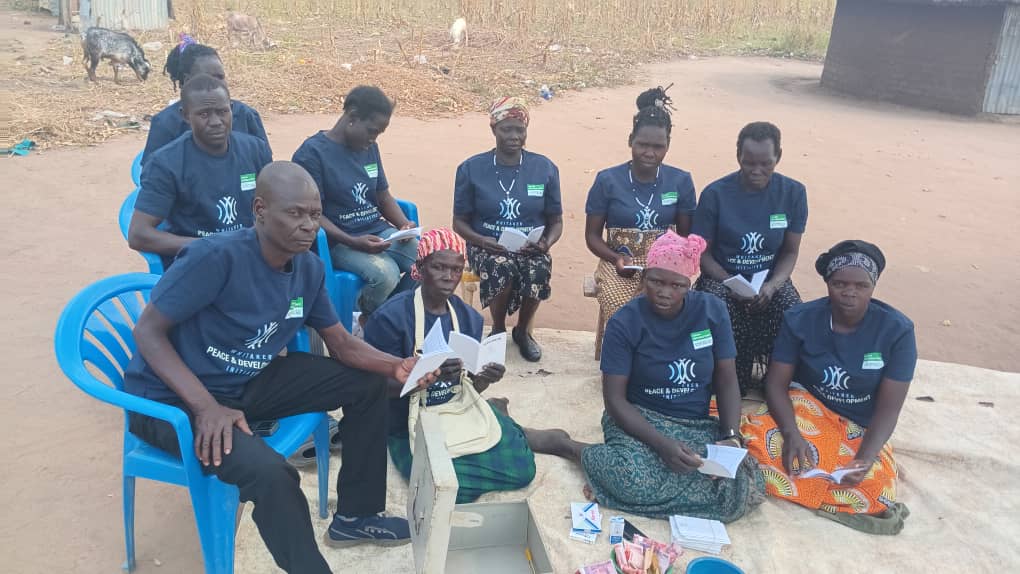
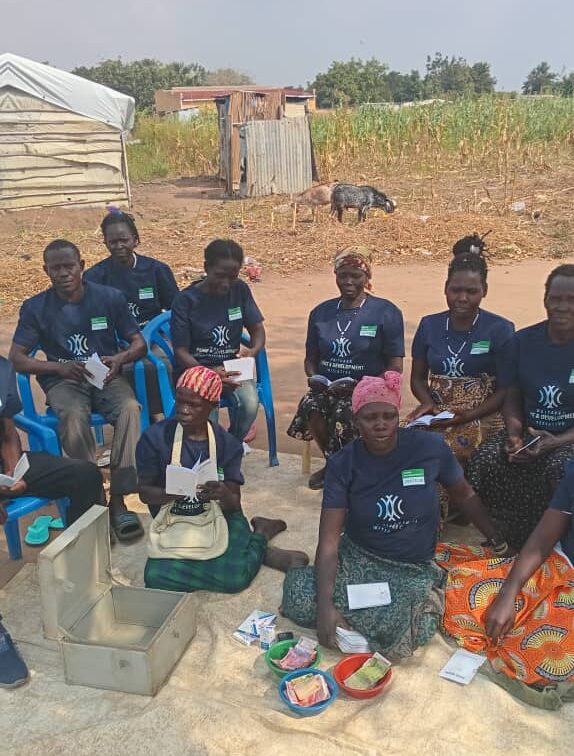
In 2025, WPDI supported 16 groups to establish and manage VSLAs, each governed by a five-member committee comprising a chairperson, treasurer (box keeper), secretary (record keeper), and two money counters. Members make regular savings contributions to a shared fund, which they can borrow from to start or expand small businesses. Loans are repaid, typically on a monthly or otherwise mutually agreed schedule, with interest, allowing capital to circulate and grow within the group.
Amesutakuru Farmers Group: a VSLA Success Story
The Amesutakuru Farmers Group is one of several VSLAs established through WPDI’s Adjumani livelihoods program and offers a powerful example of how this community-led model translates into tangible, local impact.
As Trutaru Patience, a member of the group, explains:
“Being in a group with both refugees and host community members has helped us learn from each other. Through the VSLA, I accessed a loan to invest in my farming, and my household is now more stable.”
The Amesutakuru group is a mixed association of refugee and host community members who meet weekly to mobilize savings, issue loans, and manage repayments using transparent, collectively agreed procedures. Members borrow from the group’s pooled savings to invest in agribusiness activities such as crop production, livestock rearing, produce trading, and the purchase of agricultural inputs. Loans are also used to meet essential household needs, including food, school fees, and healthcare.
According to Chandia Patricia, Group Leader of the Amesutakuru Farmers Group:
“The VSLA has given us capital for agribusiness and helped us meet basic needs. As a group, we are now planning for growth instead of surviving day by day.”
Strengthening Livelihoods and Social Cohesion
Across Adjumani, WPDI-supported VSLAs have delivered benefits that extend beyond economic gains. By saving and borrowing together, refugee and host community members have strengthened trust, cooperation, and peaceful coexistence, while reducing dependence on high-interest informal lenders and humanitarian assistance.
As Olega James, a member of the Amesutakuru group, shares:
“This VSLA has united us. We save together, borrow together, and support each other. It has reduced tension and increased trust between refugees and hosts.”
Through consistent saving and responsible borrowing, the Amesutakuru Farmers Group has become both an economic and social safety net, one example among many demonstrating how community-led financial models can strengthen livelihoods while fostering peace in displacement-affected settings.
In partnership with